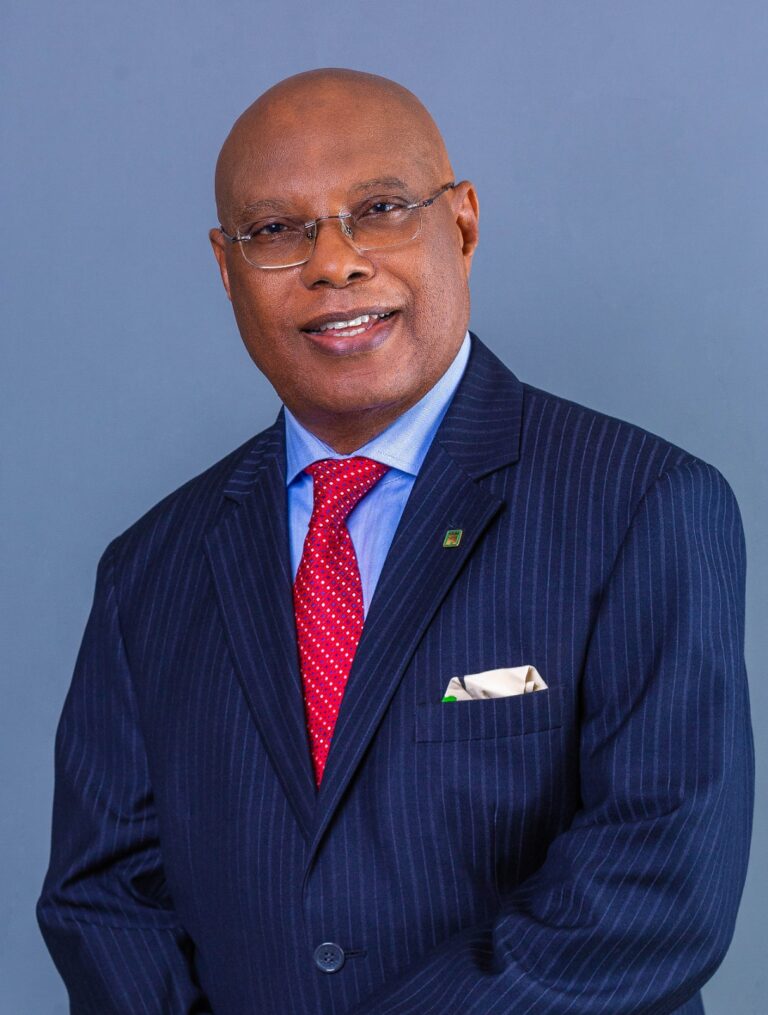
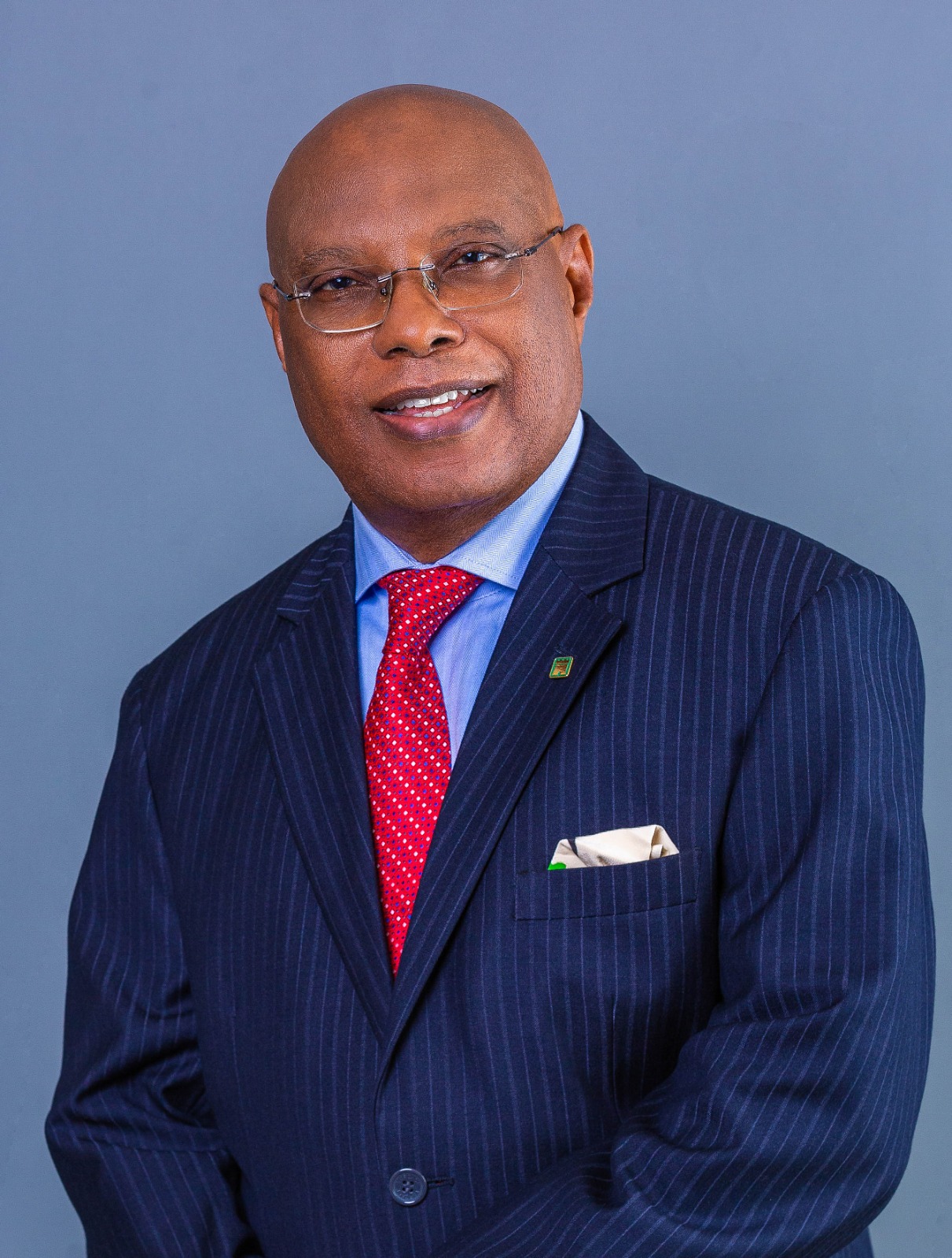
Chairman, Construction Economist Partnership Limited (CEPL)
By Festus N. Oseji
Can we meet you, your background, family, academically and professionally?
Thank you very much Festus. My name is Joseph Olusegun Ajanlekoko. I was born into the family of Superior Evangelist Samuel Olatunji Ajanlekoko and Madam Christiana Olawunmi Ajanlekoko on 1st of October, 1951. I attended Ijero Baptist Primary School in Apapa road, Ebute Meta, Lagos. The school has a close proximity to my father’s work place, The Nigerian Breweries Ltd. My father was the first African sales manager for Nigerian breweries, so we live in the brewery’s enclave in Apapa road. From there I proceeded to St. Finbarr’s College, Akoka, Yaba where I had my secondary school, St. Finbarr’s College is one of the oldest secondary school as it will be 70 years old this year. It was founded by Reverend Father Dennis Joseph Slatteryin 1956. The school started at Apapa road St. Pauls’ and later moved to the Akoka permanent site 3-4 years after.
After completing my O’ Level I went to Igbobi College Yaba, Lagos, for A’ Levels I moved from Igbobi College in 1971 to Adeola Odutola College, Ijebu Ode to complete my A ‘levels due to non availability of boarding facility (1971 – 1973). I completed my A’ Level at Adeola College with 2 distinct credits in 2 subjects which qualified me to go into UNILAG or University of Ibadan for a course in biochemistry, but I declined those choices owing to my love for a professional course.
Although, accountancy was lurking in my mind for a while, but after a second look at it, serendipity took me to meet Senior Apostle B. A. Oduntan who is a member of my fathers’ church and was a chartered quantity surveyor in practice, advised I give quantity survey surveying a trial. His advice struck a chord in me, and after a brief insight about the profession, I fell for it and decided to give it a shot.
I quickly dumped the admission for accountancy and went for quantity surveying and that was the beginning of my journey in quantity surveying profession.
I started my study of Quantity Surveying at Yaba College of Tech Mowgu.
As soon as I finished in Yabatech in 1975, I was privileged to work with Osigwe Nwogu and Partners; the first qualified Nigerian Quantity Surveyor in Nigeria, for four months, before I proceeded to UK for my admission into Willesden College of Technology in London, where I graduated from after a 4-year programme. After graduating I was lucky to be offered employment at a very good practicing firm (EC Harris) who had a staff strength of over 1000. They were one of the foremost QS firms in England. I started my professional life with them. That’s where I first honed my skill in quantity surveying.
In 1986, I came back to Nigeria, and I immediately began working for Group Q Associates founded by Chief Olusegun Odumosu. Mindful of the advice by my previous boss at EC Harris, that as a young professional, I shouldn’t work for government, I shouldn’t join big practising firm, and that after 5 years, I should set up my own practice firm. So, Group Q Associates aptly fits into the right startup firm for me at the time, and they were working on very good private sector projects which gave me the induction into the Nigerian construction environment. I was able to garner a lot of experience from the company. After 5 years I opted to be on my own as advised by Mr. Brian Harris at EC Harris. And that led me to set up Construction Economists Partnership in 1986. We are 40 years this year.
We started off by canvassing for project management jobs which majority of quantity surveying firms were not focused on as at then. First Consultant Hospital was our first job and then Eko Hospital was our 2nd job, and since then, it has been a roller-coaster. That was the beginning of my professional practice life in Nigeria till date.
Congratulations On The Fact That Your Firm Will Be 40 This Year: Briefly Speak On Your Leadership Style?
Some say that you are born with leadership attributes, while others say that you earn or work for it. I want to believe in the second school of thought that leadership is earned. You can’t abrogate it to yourself. My style is to go on the path of excellence in whatever I do because excellence is like a religion to worship. When you do things well, you get noticed and people start emulating you and start tilting towards you, and that form of transformational style of leadership has brought me into recognition.
Transformational leadership style is most impactful to the society, the profession and to the young ones in general. When you do so well in what you are doing, people will start noticing you and mimicking you.
Speak On Your Professional Contribution To The Built Environment?
Firstly, I will start with my contribution to my own profession. The first contribution was when I was at Group Q Associates, when I was invited to do a TV career interview on Quantity Surveying on NTA Channel 10. After an approval from my then boss, Chief Solomon, I did it and it gave me instant recognition. That was the passage way to getting known in the profession by elders and the public. The programme was repeated several times.
Therefore, I started my leadership career with the Lagos chapter of NIQS first as Publicity, then Deputy Chairman and finally as Chairman. During that period, I started a regular publication of the Newsletter and construction cost information, and finally became the President of the Nigerian Institute of Quantity Surveyors (NIQS) in 2002. I have been told that my tenure was quite eventful and impactful. One of such events was the building of the secretariat in Lagos and the commencement of QS Connect, as well as establishing our women’s wing (WAQSN) and the corporate logo of the Institute.
In life, we should be guided by the purpose of existence which is; service to yourself, service to your environment and service to humanity.
From my study of the built environment, I noticed that professionals are not being utilized fully. After a look at the problems, I noticed that inadequate funding within the critical construction sector is the bane of our current problem. Because without adequate funding, built environment and indeed Nigeria cannot move exponentially as we should, and this is reflected in our current housing situation in Nigeria.
United Nations said, for us to meet the needs of homelessness, we have to build about 28 million houses. And for us to do that, we need to be able to achieve 1 million houses every year for the next 25 years. A brief computation of stock taking of what the government and private sector have done by way of housing provision was next to nothing (below 100,000 houses a year).
The subsisting financial instruments we have in the country cannot help us with meeting the housing needs, let alone infrastructure. And so, I took it upon myself to canvass for a financial intermediation which is different from the existing banks. As the existing banks are not set up for capital development, they are for short-term borrowing. I was able to convince my fellow presidents in the 7nr built environment for us to canvass for the establishment of Construction Industry Bankas a way of solving our developmental problems.
The idea I proposed was to use cooperative money from the membership of 7nr built environment professional bodies to obtain a licence before approaching foreign agencies. Unfortunately, that project never saw the light of day owing to some factors beyond our control.
Hence, my major contribution to the built environment would have been the formation of that construction development bank which would have proffered the best solution to our neglected infrastructure and housing deficits in the country. But hope is not lost. I was also the President of the APBN from 2010 – 2012, where I initiated a lot of new policies and directives.
What Were Your Legacies As The President Of NIQS From 2002 -2004?
During my Presidency, we produced the first standard indigenous way of measurement called Standard Method of Measurement (SMM). We also produced the first Consultancy Services Scale of fees and Engagement for the institute, which is private sector driven, as the existing Government scale of fees doesn’t capture the essence of our work totally.
I also started our new corporate logo.
I was also one of the founding members of the Africa Association of Quantity Surveyors from Nigeria. In addition, we produced a public enlightenment pamphlet series on the role and duties of quantity surveyors generally, and I also started a Newsletter called QS Connect and Building Cost Information Materials Schedule.
I also established the women’s wing of our institute known as Women Association of Quantity Surveyors in Nigeria in 2004. I am their Life Grand Patron. We embarked on a lot of advocacy visits to create greater awareness of the importance of Quantity Surveying.
Quantity Surveying Remains One Of The Critical Elements In The Construction Industry. Your View On Its Acceptability And Ethical Practice Of The Profession?
Firstly, Quantity Surveying is still not yet totally accepted in this country, and this is because of our stage of National development, as well as corruption and dishonourable acts. For example, in Lagos, most capital projects have billboards or project boards that carry the names of the architect and the engineer. The quantity surveyors will be found missing. That’s the profession whose specialization is cost management. Such absence gives way to sharp practices and cost escalations.
The full utilization of Quantity Surveying in our country’s infrastructure is yet to be on the front burner, I am convinced that if we correct this, we will be able to make a lot of savings and plough these savings to further the development of our decaying infrastructure.
So, if we want to fast-track the rapid development of our country’s infrastructure, the QS should be given proper recognition and its role institutionalized by the Government so that proper cost management can be achieved.
Not until our infrastructure is properly secured and developed, large investment flows will not come in. It is as simple as that.
What Impact Has The Nigerian Institute Of Quantity Surveyors Made Into The Nigerian Built Environment In Your View?
In 55 years, we have been able to achieve cost control of building development in the building sector. This is evidenced in the fact that currently, in the Central Bank and other Government agencies, without the quantity surveyor, no project can go on. This is because they have come to understand our role and importance; so also most private sector multinationals.
Also, we have contributed to QS educational development in Nigeria. When I came back from the United Kingdom, there were very few universities offering Quantity Surveying course; but today, I am sure there are over 70 universities offering the course now.
As a matter of fact, it is on record that I started the Quantity Surveying degree program in the University of Lagos (UNILAG). I went to the late Prof. Ibidapo Obe and complained about the existence of other built environment professional courses being offered in the institution except Quantity Surveying, and based on his advice I took it upon myself and funded the accreditation of the course for the school to start offering Quantity Surveying.
So, our profession has continued to offer checks and balances for the industry in terms of cost, in terms of what a client gets for his money, etc. We stand as a mediator between the client and the contractor on all capital, heavy industrial projects and civil engineering works. The Government must constantly use us to guarantee value for money.
The National Executive Council Of Your Institute Find You Worthy To Be Recognized By Naming The Head Office Building In Abuja After You. How Do You Feel As A Professional And Your Advice To The Upcoming Quantity Surveyors?
Well, it was out of the blues, because I didn’t see it coming. I was humbled and overwhelmed. It’s an immense honour indeed to me for your institute to recognize your input in the growth and development of the profession. I am indeed extremely grateful for this. It shows the kind of institute we have; it’s not a political setup.
With introspection, when I started looking back at what I have contributed to the Institute It was huge! For example, I was the one who solely assisted the acquisition and the contractual agreement/arrangement of the building of our NIQS secretariat buildings in VI. I got my client to enter into a PPP arrangement with us for the specified period without the Institute putting a kobo down.
My Advice to the young ones, you must pursue positive results and excellence in what you do, and do it with a pure heart and not with any ulterior motive. Always be dedicated and committed to the course and you will be a great leader.
Honour and Recognition come through complete dedication, honesty, and sincerity in the key discharge of your duties in the affairs of your Institute.
What Can You Say About Your Professional Colleagues That Will Be Honoured On The Same Day With You The Likes Of QS EC Offoreh And QS Dr. Shehu Lawal Giwa?
I know that they deserve to be honoured. In fact, the institute building could have been named after any of them because they showed commitment in their leadership assignments. They have a passion for the well-being of the institute and during their tenure as president, they served well.
Dr. Giwa was the first PhD holder we have in the institute, and the first Northerner to become NIQS president. Late Qs. Emeka Offoreh was my classmate at Yaba tech, a very brilliant guy. He was extremely brilliant and with a highly digitalized mind.
We have jointly worked on various projects together. It’s unfortunate that his life was cut short some years back due to prostate issues. In all, they were both geniuses and rightly deserved the honour bestowed on them. They were among the pacesetters in our profession.
Your View On The State Of Infrastructure In Nigeria Generally As A Stake Holder In The Construction Industry?
Our infrastructure is abysmally poor and until we get it right, we can’t start climbing the ladder of development as a nation.
The first step for infrastructure development is the appointment of the right professionals in the execution. If we don’t do that, it’s like you are building a house on quicksand. So, we must have a structured programme and approach to it. Let’s be honest about who does what and there must be accountability. And I believe we are not tackling it the right way. If we get it right, investment will flow into our Government and country.
My appeal to the government is that we should focus more on building the infrastructure, then our progress can become exponential. One of the ways I think we can solve this is the creation of the financial instrument that is needed to get long-term funds and single-digit interest into our financial ecosystem.
Your Final Words?
To the media team, I want to thank you for coming. Sustainability of a project is based on the kind of management and leadership the brand is built on. I must say kudos to you and to your team leader in the continuous and steadfast production on a regular bases these outstanding journals. It takes ruggedness and doggedness to survive in this our terrain and for this long. So, keep it up, and we will be there for you as you celebrate your milestone.
For the built environment, I want to appeal to the professionals that we work as a unit. We all belong to the same family. Let us fuse together to form a formidable construction industry that will help to develop our country in the right way. To achieve that, the clear delineation of roles becomes imperative.
The truth of the matter is that we can no longer work in silos. Today’s reality calls for cooperation and collaboration. That is what the digital age has brought about. We are all one body with different parts, and those different parts must function for it to become perfect. Just like atriune!
Final Word To Your Institute For Finding You Worthy To Be Honoured
I want to thank the President and Executive Council Members of NIQS for deeming me qualified to be honoured this way. It’s something I can never forget as long as I live, and I promise that I will continue to dedicate my time and energy to the cause of NIQS. I shall always be ready to offer my advice and input on all matters that are brought to my attention.
The Institute is on the right trajectory to attaining global recognition. We must always put quality and service first in all that we do. Advocacy must be relentlessly pursued to ensure that our services and importance as cost managers are well recognized and embraced by the Government and all Government agencies.
We must not relent in the pursuit of excellence. We must embrace all facets of our services. Keep the flag flying!
SOURCE: IN HOUSE
About The Author