
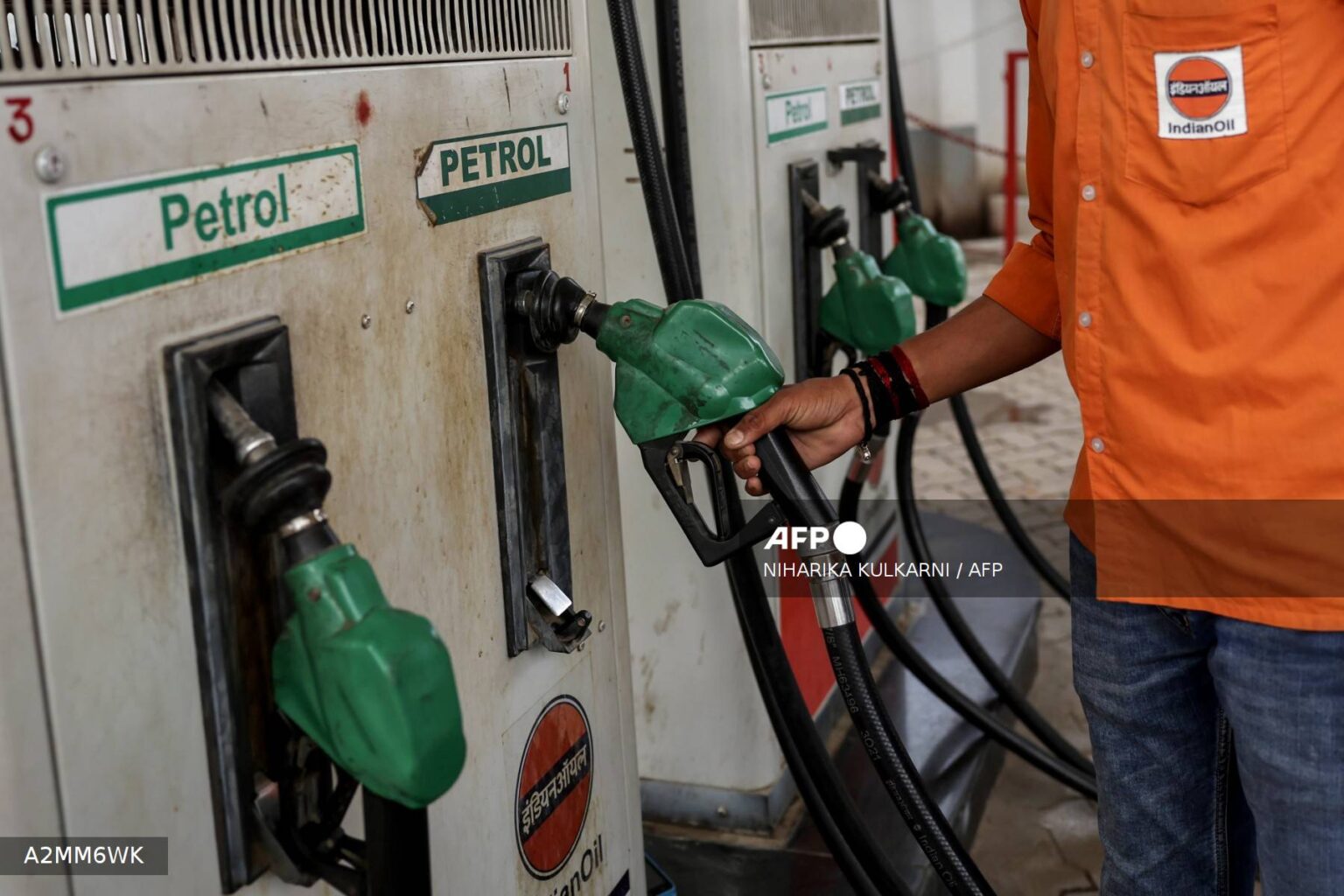
A petrol pump attendant picks up a nozzle to refuel a vehicle at an Indian Oil fuel station in Varanasi on March 10, 2026. The oil price spike caused by the war in the Middle East has sparked exasperation at petrol pumps around Asia, where many economies are heavily dependent on fossil fuel imports. (Photo by Niharika KULKARNI / AFP)
Oil prices fell by about $3 on Thursday as investors bet on a possible easing of tensions in the Middle East following hopes of a wider ceasefire deal that could eventually lead to the reopening of the Strait of Hormuz.
According to Reuters, the decline came after Israel and Lebanon said they had agreed to implement a ceasefire, a development that raised expectations of possible diplomatic progress involving Washington and Tehran.
Iran has reportedly made any agreement conditional in part on an end to hostilities between Israel and Hezbollah, the Iran-aligned group in Lebanon.
Brent crude futures dropped by $3.20, or 3.27 per cent, to $94.61 per barrel on Thursday, while the US West Texas Intermediate crude fell $3.71, or 3.86 per cent, to $92.31 per barrel.
The benchmarks had risen about two per cent on Wednesday after renewed Middle East tensions, including reported Iranian attacks on Kuwait and US military strikes near the Strait of Hormuz.
Reuters reports that in the United States, the Republican-led House of Representatives approved a resolution on Wednesday aimed at blocking former President Donald Trump from continuing military action against Iran. However, the measure would still require Senate approval and a two-thirds majority in both chambers to override a likely veto.
Meanwhile, Russia’s Deputy Prime Minister Alexander Novak said on Thursday that Russian oil production has fallen since the start of the year due to unplanned refinery maintenance, marking the first time a Russian official has acknowledged the decline.
In the United States, crude stockpiles also recorded a sharp draw. Data from the Energy Information Administration showed that inventories fell by 8 million barrels to 433.7 million barrels in the week ended May 29, far above analysts’ expectations of a 4-million-barrel drop in a Reuters poll.
Oil traders said the combination of easing geopolitical fears and shifting supply data continued to drive volatility in global crude markets.
In Nigeria, however, the Nigerian National Petroleum Company Limited recorded an over 70 per cent rise in revenue and profit. The Dangote refinery also benefitted from high fuel exports, but the masses are enduring higher fuel prices, threatening inflation
SOURCE: PUNCH NEWS PAPER
About The Author


