
Africa’s richest man, Aliko Dangote, has unveiled plans to build another 650,000 barrels-per-day refinery in East Africa, signalling an ambitious expansion of his refining footprint beyond Nigeria as the continent seeks to cut reliance on imported fuel.
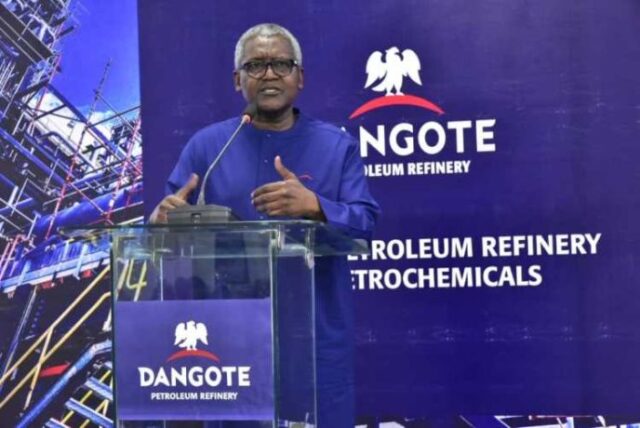
Dangote disclosed this during a presidential panel at the Africa We Build Summit, organised by Africa Finance Corporation, on Thursday in Nairobi, saying his company is ready to replicate the scale and model of its Lagos-based refinery if governments in the region provide the needed support. Our correspondent monitored the proceedings of the panel session.
He sought the support of East African governments to replicate his Nigeria-scale refinery in the region in a move that could reshape fuel supply.
His remarks came as Kenya, Uganda, and Tanzania intensified talks to establish a joint refining hub in the Tanzanian port city of Tanga, a project expected to process crude from across the region, including supplies from the Democratic Republic of Congo and South Sudan.
Speaking at the forum, Dangote expressed confidence in the feasibility of the project, citing his experience in delivering the 650,000bpd refinery in Nigeria.
He said, “I can give commitment to the presidents here today that if they support the refinery, we will build the identical one that we have in Nigeria, a 650,000 barrels-per-day refinery. The discussions are still early, but it will work. There is nothing that can stop it. We have done it before in Nigeria, and that is why we are taking this bold step again.”
Dangote revealed that his group had already commenced expansion works in Nigeria to scale up refining capacity to 1.4 million barrels per day, a move he said would position the facility as the largest refinery in the world.
“We have already started piling for the expansion. We are building it to a scale of 1.4 million barrels per day. It will be the largest refinery globally. That also means we will account for about 10 per cent of the entire refining capacity of the United States, alongside significant petrochemical production,” he added.
The billionaire industrialist stressed that Africa must prioritise industrial self-sufficiency, warning that continued dependence on imports exposes economies to severe price shocks. He cited recent volatility in global petrochemical markets as evidence of the risks.
“Look at what is happening today. If not for the local production of polypropylene in Nigeria, many businesses would have collapsed. Cement packaging, flour, rice, grains—everything depends on it. In just 45 days, the price jumped from about $900 per tonne to nearly $3,000 per tonne. That tells you why we must build local capacity and stop relying on imports,” Dangote said.
According to him, the proposed refinery will not only deepen Africa’s refining capacity but also unlock large-scale investment opportunities for the continent. “We now have strong financial institutions that are willing to support big-ticket projects, and we also have the vision to execute them. This was not the case years ago.
“There was a time in Nigeria when interest rates were as high as 44 per cent. We had to rely on international institutions like the IFC to raise about $478m for our early projects. Today, the landscape has changed significantly,” he said.
Dangote also disclosed plans to open up ownership of his refinery business to African investors, promising dollar-denominated returns. “We want all Africans to invest. This is a continental asset, and we will be paying dividends in dollars. It will deepen the market and give Africans a stake in critical infrastructure,” he added.
On timelines, he said the East African refinery could be delivered within four to five years once agreements are reached. “My commitment is that if we agree with three or four governments in the region, we will lead the process and ensure that the refinery is built within the next four or five years,” he stated.
Earlier, Kenya’s President, William Ruto, confirmed that discussions were ongoing with Dangote and regional partners to establish a joint refinery in Tanga.
Ruto said, “We are going to have a joint refinery in Tanga to benefit all of us because that refinery will take crude from the DRC, Kenya, South Sudan, and Uganda. We are in talks with Dangote to see how we can collaborate on building a refinery in the region. This is part of our broader strategy to strengthen energy security and reduce dependence on imported petroleum products.”
He added that the project would be supported by a pipeline linking Kenya’s coastal city of Mombasa to Tanga, ensuring a steady supply of crude to the facility.
Industry data shows that about 75 per cent of refined petroleum products consumed in East and Southern Africa are imported, largely from the Middle East, exposing the region to supply disruptions and price spikes, particularly during geopolitical tensions.
The push for a regional refinery gained urgency following recent global supply uncertainties, including disruptions linked to tensions involving Iran, which highlighted Africa’s vulnerability to external shocks.
The planned refinery also comes as Uganda advances its own refining ambitions, having signed a deal in 2024 with UAE-based Alpha MBM Investments to develop a 60,000bpd plant.
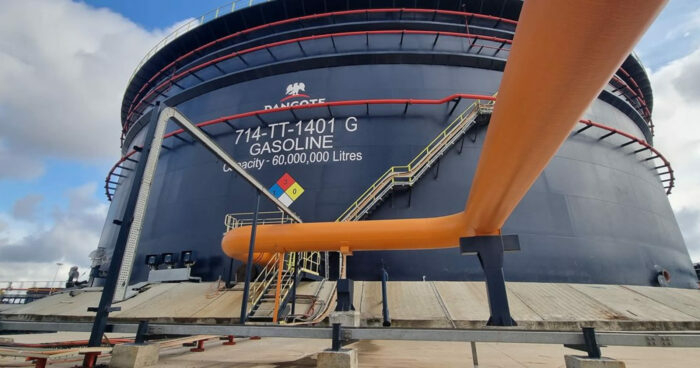
Dangote’s refining expansion builds on the successful rollout of his 650,000bpd refinery in Lagos, which commenced operations in 2024 and is designed to meet Nigeria’s domestic fuel demand while exporting surplus products.
The facility is widely regarded as Africa’s largest refinery and a cornerstone of efforts to transform the continent from a net importer of refined petroleum products to a refining hub.
Beyond refining, Dangote also announced plans to establish about 20 fertiliser blending plants across Africa by 2028, further deepening his footprint in the continent’s industrial value chain.
Energy experts say the proposed East African refinery, if realised, could significantly alter Africa’s fuel supply dynamics, reduce import dependence, and enhance regional energy security.
SOURCE: PUNCH NEWS PAPER
About The Author