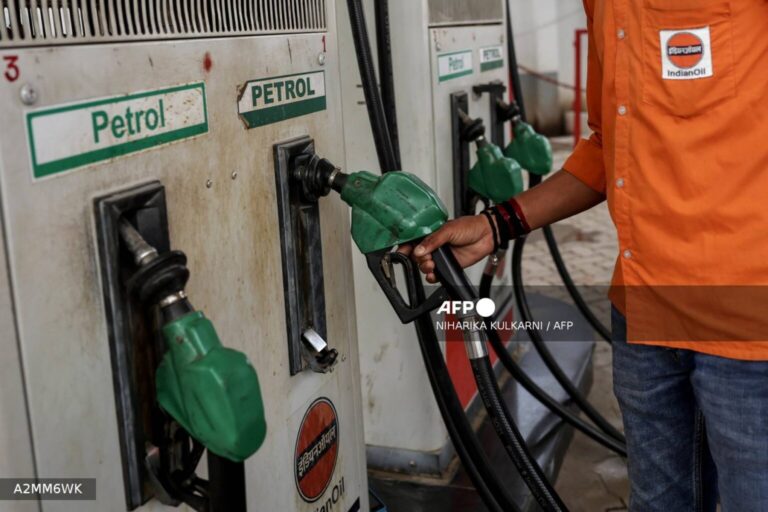
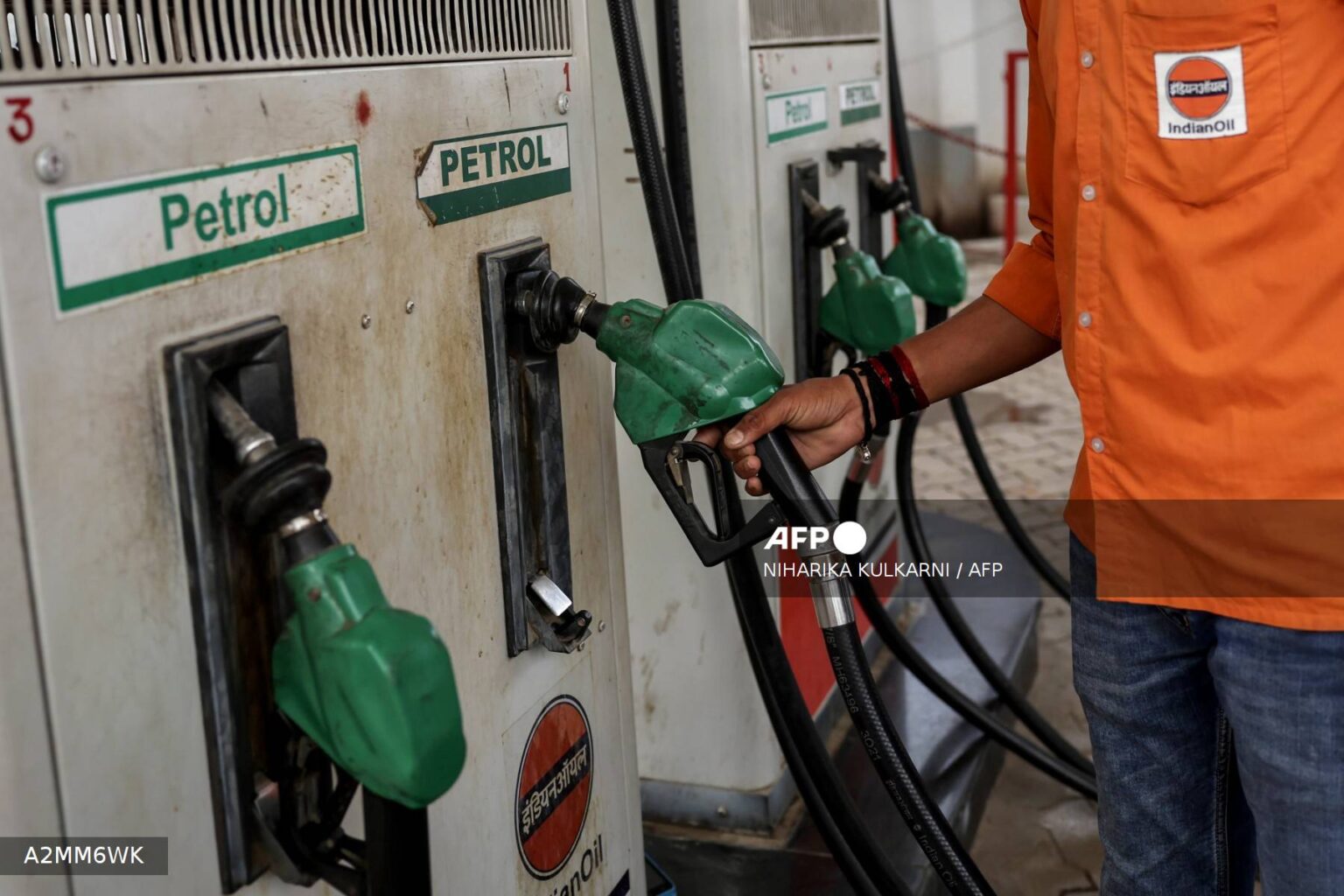
A petrol pump attendant picks up a nozzle to refuel a vehicle at an Indian Oil fuel station in Varanasi on March 10, 2026. The oil price spike caused by the war in the Middle East has sparked exasperation at petrol pumps around Asia, where many economies are heavily dependent on fossil fuel imports. (Photo by Niharika KULKARNI / AFP)
Fresh diplomatic moves between the United States and Iran triggered a further decline in global oil prices on Thursday, raising hopes of a possible reduction in petrol prices in Nigeria.
Brent crude fell to $93 per barrel on Thursday from about $95 recorded on Wednesday after reports emerged that the United States and Iran were close to reaching a 60-day memorandum of understanding aimed at extending a ceasefire and opening negotiations on Iran’s nuclear programme.
According to Axios, an American news website, US and Iranian negotiators had reached an agreement on the framework of the deal, although President Donald Trump had yet to give final approval, while Iran had also not officially confirmed its acceptance as of press time.
The report said the proposed agreement would guarantee unrestricted shipping through the Strait of Hormuz, a key global oil route that has witnessed heightened tensions in recent months.
Axios reported that the deal would also include the phased lifting of the US naval blockade, sanctions waivers to allow Iran to sell oil freely, and commitments to negotiate broader sanctions relief and humanitarian support.
The easing of tensions between the two countries immediately impacted the oil market, with traders reacting positively to expectations of improved crude supply and reduced geopolitical risks in the Middle East.
The decline in crude prices has renewed expectations among Nigerians that local petrol prices could be reduced in the coming weeks if the downward trend persists.
Nigeria, despite being an oil-producing nation, remains vulnerable to fluctuations in global crude prices and exchange rates. In recent months, petrol prices in the country have remained elevated following the removal of fuel subsidies and the deregulation of the downstream oil sector.
The Dangote Petroleum Refinery had to raise petrol prices as the US-Iran tension impacted oil prices. Industry experts have repeatedly noted that movements in international crude prices significantly influence gantry prices.
The Strait of Hormuz remains one of the world’s most strategic oil transit routes, handling a significant portion of global crude exports. Any easing of tensions around the corridor is often viewed by investors as positive for global energy supply stability.
Axios quoted one US official as saying, “This is an agreement to get everybody to the table. We will work out the details in the negotiations.”
The report added that both countries would use the 60-day negotiation window to discuss Iran’s highly enriched uranium stockpile, enrichment activities, sanctions relief, and the release of frozen Iranian funds.
SOURCE: PUNCH NEWS PAPER
About The Author