
As stakeholders seek incentives for local refiners,
BY CHIKA IZUORA and CEES HARMON,Lagos
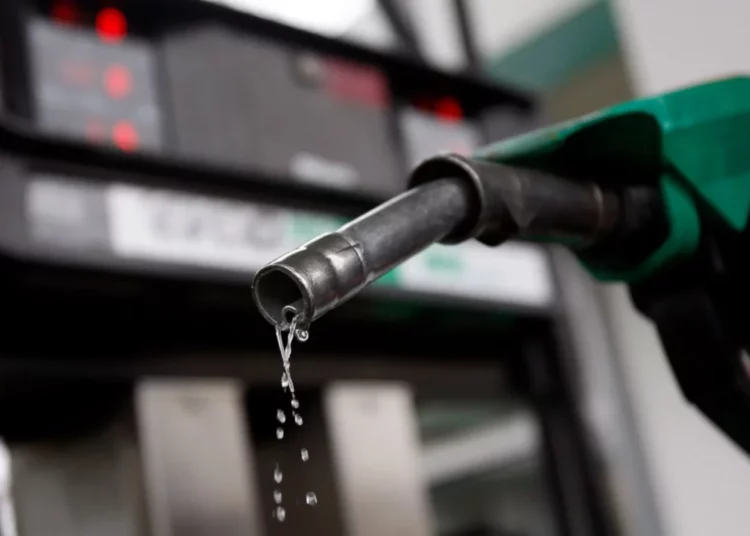
The ongoing competition on the pricing of Premium Motor Spirit (PMS) also called petrol, will ensure Nigerians enjoy better petrol pricing with incentive to local refiners, says oil sector stakeholders.
This they said, corroborating the group chief executive officer of the Nigerian National Petroleum Company Limited (NNPCL), Bayo Ojulari, who assured Nigerians that the ongoing price competition in the downstream petroleum sector will ultimately benefit consumers.
Speaking on Sunday, Ojulari described the current market tensions as a natural consequence of Nigeria’s transition from total import dependence to domestic refining.
“Where there is healthy competition, the buyers are the ultimate beneficiaries. And I think for us, we need to keep our minds that the market will stabilise.After a while, there’ll be some tension, because we’re going through a major transition,” Ojulari told journalists after briefing President Bola Tinubu in Lagos on Sunday.
The remarks is against the backdrop of an intense price war that has seen petrol prices crash from over N1,200 per litre in November 2024 to as low as N739 per litre at some retail outlets in December 2025, driven primarily by competition between Dangote Refinery, NNPCL and independent marketers.
“At the end of the day, I can tell you that Nigerians on the street are going to be the beneficiaries,” Ojulari declared.
Clarifying NNPCL’s role in the deregulated market, Ojulari emphasised that the company is no longer responsible for petroleum product pricing or regulation under the Petroleum Industry Act.
The first thing you have to know is that the PIA did something fundamental. Before the PIA in 2021, which rolled in 2022, everything was under NNPC, including some regulations. The PIA divided the roles of regulation from what I will call the business,” he explained.
Ojulari added, “The NMDPRA is responsible for all downstream regulation and midstream, as you know, and the NUPRC is responsible for all upstream regulations.
“So it’s very important that Nigerians understand that post-PIA, we as NNPC are not regulators.”
He stressed that, NNPC has been instituted by the PIA to become “a commercial company, which means a company that needs to compete profitably and be successful profitably.”
Ojulari disclosed that NNPCL no longer receives federation allocations and must raise finance independently “like any other business.”
Reacting to this development, the Crude Oil Refiners Association of Nigeria (CORAN) said, the ongoing price fluctuations for petrol will stand to benefit Nigerians afterwards.
The association said, market stability is the best option for the country where pricing is determined by market operations that is also sustainable.
CORAN spokesman, Eche Idoko, while speaking to LEADERSHIP said, what is playing out now is temporary price adjustments that is not sustainable.
Idoko said, if the Nigerian Midstream and Downstream Petroleum Regulatory Authority(NMDPRA) and the Nigerian Upstream Petroleum Regulatory Authority (NUPRC) would fully implement all industry incentives especially as it affects local refiners, Nigeria would witness more quality and stable supply and pricing mechanism.
According to Idoko, if the federal government sustains and expand the naira-crude initiative the market will Nigerians will enjoy lower price of petrol
He said, after careful review of the policy , it was considered a huge success as it helped to strengthen the naira and crashed the price petrol. The association, he said, had made several presentations and demand to authorities, especially, to NMDPRA to establish a mechanism for pricing that will determine a benchmark to guide pricing module.
He said, what is playing out now is clear absence of regulatory requirements that will not offer the market the benefits of petroleum industry stability.
LEADERSHIP reports that one of the demands of the association is the establishment of a Refinery Intervention Fund to assist local refineries expand their capacity from the current 27,000 barrels per day to about 400,000 barrels per day.
This follows a series of other consultations and meetings by CORAN with government agencies and representatives with a view to foster the core issues affecting local refining of crude in Nigeria.
In the past, the association had met with the NUPRC, including naira-crude supply because the matter is captured under the domestic crude oil supply obligation which is clearly stipulated under the Petroleum Industry Act (PIA).
Oyarekhua added that: “The modular refineries that are currently producing are starved of crude and even when the crude is available, the local producers want them to pay for it in US dollars.”
This, according to the position of CORAN, must be addressed to enable Nigerian enjoy self-sufficiency in crude refine.
Idoko, informed that initial arrangement is to supply crude to Dangote refinery on the understanding that it will reduce pressure on naira and ensure optimal performance of the refinery and make product available and affordable helped in stabilzing the domestic market.
However, the NNPC Ltd has begun discussions with the Dangote Oil Refinery to extend its contract for supplying crude oil in the naira currency, the company said.
A managing director of a major petroleum marketer who would not want to be named told our correspondent in confidence that the price war is coming with severe consequences and repercussions.
According to him, both the marketers and Dangote are losing so much and the masses will pay in the long run.
“All the players will eventually want to recover the loss incurred in the ongoing battle which is not sustainable,” he said.
However Idoko, said stressed that, if government can implement all incentives by 2026, local refiners will guarantee quality, and affordable prices of petrol much more lower than what it is now.
Meanwhile, the chief executive officer of the Centre for the Promotion of Private Enterprise (CPPE), Dr. Muda Yusuf said, the development is welcome if the competition is among refineries, and not competition between refiners and importers.
In that case, according to him, there should be fair regulations to ensure a level playing field.
He said, the sharp drop in petrol prices reflects the positive effects of deregulation and domestic refining, but warned that sustainability remains key.
“There is no doubt that competition, especially Dangote Refinery’s entry, has corrected some of the distortions in pricing. However, the critical issue is whether these prices are cost-reflective and sustainable. If prices fall below economic reality, some marketers may exit the market, which could reduce competition in the long run,” Yusuf said.
He added that, while consumers are enjoying temporary relief, policy consistency and regulatory neutrality would determine whether the benefits last.
On the other hand, energy economist, Femi Ajayi, said: “What we are seeing is classic market adjustment Nigeria moved from a monopoly and subsidy-driven system to a competitive market almost overnight. In such transitions, price volatility and tension are inevitable.”
Ajayi noted that, domestic refining has fundamentally altered Nigeria’s cost structure. “Producing petrol locally reduces exposure to foreign exchange risks and shipping costs, which explains why prices are coming down. But the danger is that smaller marketers who bought at higher prices may face severe balance-sheet stress, leading to consolidation, ” Ajayi stated.
On his part, financial economist at Nnamdi Azikiwe University, Dr. Felix Echekoba, cautioned that lower pump prices alone do not automatically translate into broader economic relief. “Yes, Nigerians are paying less at the pump today, but inflation is still high and incomes remain weak. The real test is whether these price reductions feed into lower transport costs, food prices and industrial input costs,” he said.
“This is the first time in decades that Nigeria is experiencing price discovery driven by domestic supply. Dangote Refinery has changed the game, and NNPCL’s role as a commercial player rather than a regulator is critical,” he added.
Recall that the price war intensified dramatically in December 2025 when Dangote slashed its ex-depot price from N970 to N699 per litre, forcing other players to follow suit or risk losing market share.
MRS filling stations, Dangote’s retail partner, began selling at N739 per litre nationwide, while NNPC retail outlets dropped prices from N875 to between N825 and N840 per litre depending on location. Independent marketers followed, with some selling as low as N865 per litre.
Data from Petroleumprice.ng showed that Dangote Refinery made over 20 price adjustments in 2025 alone.
SOURCE: LEADERSHIP NEWS PAPER
About The Author