BY NSE ANTHONY-UKO Abuja AND CHIKA IZUORA,Lagos
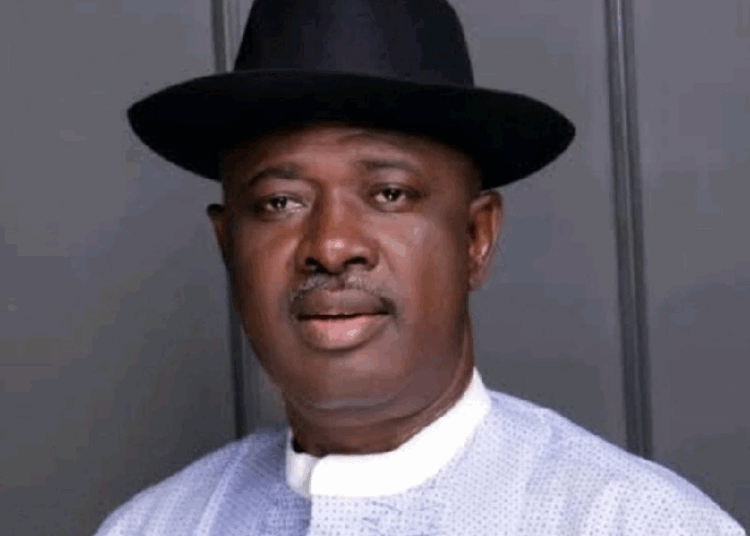
The minister of state for Petroleum Resources (Gas), Senator Heineken Lokpobiri, has warned industry players that the deregulation of Nigeria’s petroleum sector must not be used as a pretext for excessive pricing or shortchanging of consumers.
The minister directed the Nigerian Midstream and Downstream Petroleum Regulatory Authority (NMDPRA) to ensure that petroleum marketers do not exploit Nigerians through excessive pricing under the deregulated downstream market.
This is as petroleum marketers called for an urgent stakeholder meeting with regulatory agencies to address growing concerns over the retail price of Premium Motor Spirit (PMS), commonly known as petrol, saying current selling prices are a direct reflection of procurement costs.
Speaking at the 2026 NMDPRA General Counsel and Legal Advisers Forum, in Abuja on Monday, Lokpobiri said the Petroleum Industry Act of 2021 provided the legal framework for a more transparent and commercial sector, but regulators must now ensure the law delivers results for investors and consumers alike.
“Deregulation is not a licence for profiteering,” Lokpobiri said.
He acknowledged that removing price controls had ended artificial scarcity and helped ensure product availability since 2023, but he stressed that the regulator has a statutory duty to prevent profiteering under the PIA.
The minister said compliance remains important, but called for a shift in focus toward regulatory certainty:
“Compliance is the foundation. Regulatory certainty is the ceiling we must now be building toward,” he said, urging authorities to be clear, consistent and predictable to attract long-term investment.
Lokpobiri also challenged legal advisers and general counsel to play a constructive role. He described them as “architects of investor experience” and urged them not to let caution harden into obstruction.
“When the rules are not clear enough, say so, because that feedback is how we improve,” he told participants.
The minister pointed to global market volatility and geopolitical tensions as reasons investors now favour jurisdictions with dependable rules and institutions.
He said the government had already taken steps to strengthen the sector, including publishing guidelines and implementing reforms to support projects such as the Dangote Refinery.
Lokpobiri noted that while market forces should eventually correct prices following the de-escalation of tensions between the US and Iran, the regulator must act to ensure deregulation is not exploited to the detriment of consumers.
“When someone pays for 10 litres of Premium Motor Spirit, they should receive exactly 10 litres, not less,” he said.
He urged regulators to improve transparency, stakeholder engagement and service delivery, and asked industry players to maintain high governance and compliance standards. The forum, he said, should equip legal teams to interpret regulatory expectations and guide compliance strategies that support investment and consumer protection.
The NMDPRA Forum brings together legal heads of licensed operators and the regulator to discuss regulatory practice and sector development.
Lokpobiri said insights from the meeting would help shape better policy and regulation going forward.
However industry sources, speaking to LEADERSHIP on condition of anonymity, said criticism of marketers for charging high prices is misplaced while procurement prices and market dynamics remain unclear to the public and some policymakers. They urged regulators to convene a forum in which procurement and selling templates are reviewed jointly by all stakeholders to promote transparency and mutual understanding.
“If authorities are worried about perceived profiteering by marketers, a dialogue where procurement and selling templates are examined by all parties would provide clarity on market dynamics,” one industry insider said. “This product is deregulated; marketers do not have the luxury of borrowing heavily to subsidise sales, and they cannot absorb losses without risking their ability to service debts.”
Sources drawn from both major and independent marketing groups emphasised that the price at which marketers sell petrol is influenced primarily by the price at which they procured the product. They warned that attempts to force retail prices below purchase cost would be unsustainable and could destabilise the downstream sector.
“Marketers will resist pressure to sell below cost,” another source said. “Market forces determine when prices can fall or rise. Artificial suppression of prices will only lead to shortages or financial distress for firms that operate on thin margins.”
The marketers’ appeal for a stakeholder meeting comes amid heightened public scrutiny of downstream fuel pricing, with consumer groups and some political actors accusing some operators of profiteering. Marketers counter that a lack of transparent data on import costs, foreign exchange rates, logistics and margin structures has fostered misunderstanding about how retail prices are derived.
Industry representatives proposed that any convened forum should include the Nigerian Midstream and Downstream Petroleum Regulatory Authority (NMDPRA), the Nigerian Upstream Petroleum Regulatory Commission (NUPRC), major and independent marketers, and consumer representatives. They said the meeting should aim to publish an agreed template explaining the components of PMS pricing — including ex-refinery/import (landing) price, freight, insurance, foreign exchange adjustments, storage and distribution costs, and permitted margins — to improve public confidence.
Petrol prices have risen sharply since the Middle East tensions started, mainly because global crude oil prices moved up fast.
In the early days of the conflict, Brent crude jumped from about $72.87 to around $79 a barrel, while WTI rose from about $67 to roughly $72.
The effect also fed into Nigeria’s pump prices.
By May 2026, the average retail price of petrol had risen by 55.31 per cent year on year to almost N1,400 per litre.
A separate market tracker put Nigeria’s average gasoline price at about N1,175.50 per litre in June, though actual prices still varied by location and seller.
On Sunday, the FCCPC said petroleum marketers should not exploit consumers and warned that current petrol prices did not match the recent fall in crude prices. The commission said crude had dropped to about $73 after the ceasefire and reopening of the Strait of Hormuz, and it urged fair pricing and more transparency in the market.
Meanwhile, the NMDPRA said it will deepen stakeholder engagement and strengthen regulatory clarity to drive investment in the country’s petroleum sector.
The Authority’s chief executive, Rabiu Abdullahi Umar, made the commitment in his opening remarks at the NMDPRA General Counsel and Legal Advisers Forum 2026, themed “Beyond Compliance: Driving Regulatory Certainty and Investment Confidence in Nigeria’s Petroleum Sector.”
Umar told legal advisers and general counsel from licensed operators that while compliance remains the foundation of effective regulation, the industry must now focus on predictability, transparency and investor confidence.
“Compliance, while essential, is not an end in itself,” he said. “The broader objective is to create a petroleum industry characterised by certainty, predictability, transparency and confidence.”
The two-day forum, Umar said, brings together regulators, legal practitioners and industry stakeholders to examine how the Petroleum Industry Act (PIA) 2021 is being implemented five years after it was enacted.
The forum’s six sessions will cover regulatory certainty and investment, institutional coordination, investment pathways, energy security, midstream development and host community implementation.
“We are now focusing not only on what the law says but on how the law is being implemented, how regulations operate in practice, how markets respond to reforms, and how investors are assessing opportunities,” Umar said.
He described the forum as “a listening platform” and urged participants to offer candid feedback, identify areas of ambiguity and propose practical solutions.
Umar said the Authority will approach regulation with “humility and openness,” promising fair and consistent enforcement and ongoing dialogue with industry players.
“The Authority will continue to engage openly with stakeholders, act transparently, regulate fairly and consistently, and remain responsive to the realities of an evolving industry,” he said.
The forum builds on last year’s efforts to embed compliance as a shared value between the regulator and legal leadership of operators.
Umar said the next phase requires translating that compliance into a stable business environment that encourages long-term capital commitments and supports Nigeria’s broader economic goals.
He acknowledged the responsibilities placed on regulators, operators and legal advisers by the PIA and invited participants to help improve regulatory outcomes through constructive engagement.
“We cannot achieve those objectives in isolation. We will achieve them through partnership, dialogue, and collective commitment of all stakeholders represented in this room,” he said.
The event draws legal and compliance chiefs from across the midstream and downstream sectors and will feature a high-level government panel alongside investment and technical sessions aimed at aligning regulatory practice with market realities.
SOURCE: LEADERSHIP NEWS PAPER
About The Author