


By Abiodun Folarin
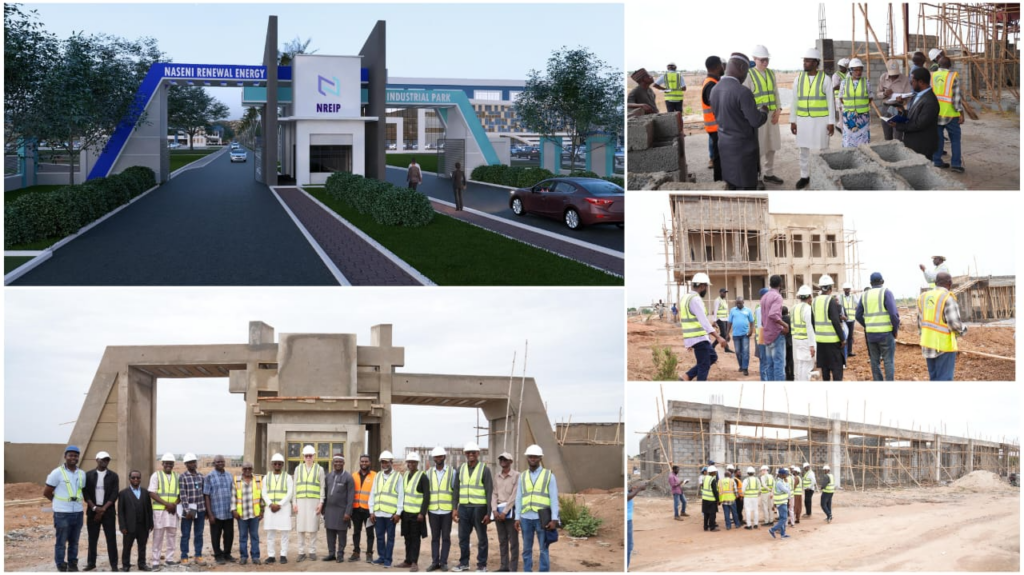
WorldStage– Construction is advancing steadily at the National Agency for Science and Engineering Infrastructure (NASENI), Renewable Energy Industrial Park in Gora, Nasarawa State, signalling a major leap in Nigeria’s push to translate scientific research into real-world energy solutions.
The 40-hectare facility is being developed as a multi-energy innovation hub where science, engineering and manufacturing converge to tackle one of the country’s most pressing challenges energy access. Beyond infrastructure, the project represents a deliberate shift toward science-driven industrialisation, with a focus on domesticating renewable energy technologies.
At the heart of the park is a bold ambition: to move Nigeria from a consumer of imported clean energy systems to a producer of critical components. Plans for solar panel manufacturing, wind turbine assembly, small hydro equipment production and biomass technologies reflect an integrated scientific ecosystem designed to localise innovation and reduce reliance on foreign technologies.
During an inspection of the site, Special Adviser to the Executive Vice Chairman on Renewable Energy and Project Manager, Engr. Suyud Muhammad, underscored the broader scientific vision of the initiative. He explained that the park is structured to reflect the full spectrum of renewable energy research and application, noting that energy innovation extends well beyond solar technologies.
The project is also positioned as a response to Nigeria’s energy deficit, where over 80 million people remain without access to electricity. By combining research, production and deployment capabilities, the park aims to accelerate the development of scalable, locally adapted energy solutions capable of reaching underserved communities
From a science impact perspective, the Gora facility is designed to function as a knowledge and innovation ecosystem. Its planned Research and Development Centre, Knowledge Park and Energy Centre are expected to foster collaboration between scientists, engineers, academia and industry players bridging the long-standing gap between laboratory research and commercial application.
Equally significant is its potential to catalyse a new clean energy value chain. By embedding manufacturing within a research-driven environment, the project is expected to stimulate technological learning, support indigenous engineering capabilities and create a pipeline for innovation-led enterprises.
With an estimated 2,000 direct jobs and up to 50,000 indirect employment opportunities, the initiative also highlights the socio-economic impact of science-based development. It demonstrates how investments in scientific infrastructure can drive job creation, industrial growth and technological self-reliance.
The project is being executed through a multi-stakeholder model involving private sector partners and academic institutions, aligning with NASENI’s “3Cs” framework Creation, Collaboration and Commercialisation. This approach reinforces the growing recognition that sustainable innovation thrives at the intersection of research, industry and policy.
As construction progresses, the Gora Renewable Energy Industrial Park is shaping up not just as an industrial site, but as a cornerstone of Nigeria’s emerging clean energy science ecosystem one with the potential to position the country as a regional hub for renewable energy research, manufacturing and export across West Africa and beyond.
SOURCE: IN HOUSE
About The Author


