

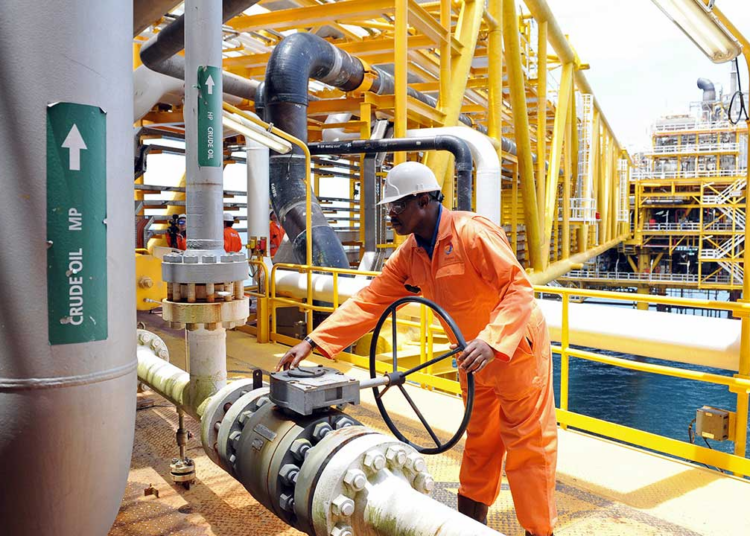
The confidence-building by the Nigerian National Petroleum Company Limited (NNPCL) that the country is ready to increase oil production by about 100,000 barrels per day over the next few months is cheering news for the industry.
The Company’s Group Chief Executive Officer (CEO), Bashir Bayo Ojulari, gave this assurance, citing the government’s ongoing reforms. Still, industry analysts are concerned about the lack of infrastructure, which has threatened the evacuation of products.
The country averaged about 1.6 million to 1.7 million barrels per day last year and is hoping to average 1.8 million bpd this year, Bayo Ojulari told Reuters on the sidelines of the CERAWeek by S&P Global conference in Houston, when asked if Nigeria could help make up for the crude shortfall resulting from the U.S.-Israeli war on Iran.
“We are building that capacity,” he said, though he added, “We are not like Saudi Arabia,” referring to the top OPEC member. “But we can contribute.”
During an onstage interview at the conference, Bayo Ojulari said NNPC completed a full portfolio review of its business last year and is beginning to implement changes this year. One focus is improving execution and ensuring projects are delivered on budget and on time, after previous delays, he said.
However, investment in crude oil evacuation systems is limited, thus limiting the capacity of evacuation plans. Nigeria’s crude oil production is severely constrained by inadequate, aged, and insecure evacuation infrastructure, with many pipelines dating back to the 1960s/70s.
Widespread sabotage, pipeline corrosion, and lack of investment have forced a shift toward costly barging, keeping production below 1.5 million barrels per day despite having capacity for over 37 billion barrels in reserves.
The recent goal achieved by Green Energy International Limited (GEIL) with the Otakikpo Crude Oil Export Onshore Terminal is one of the industry’s most innovative projects.
The lack of infrastructure for crude oil evacuation usually results in output losses, which has compelled some International Oil Companies (IOCs) to divest from their onshore assets. Unfortunately, the Amukpe-Escravos Pipeline, a major crude conveyor channel, is facing divestment issues. This is a major project expected to result in a seamless transition to sustain evacuation operations.
Fresh questions over process, pricing and regulatory alignment are turning the Amukpe–Escravos Pipeline into a critical test of governance, value protection and national interest in Nigeria’s oil sector.
According to analysts, “The AEP matter is no longer just a transaction story. It has become a wider test of how Nigeria governs, values and safeguards strategic oil infrastructure.”
The Amukpe–Escravos Pipeline (AEP), one of Nigeria’s most strategically important crude evacuation assets, is at the centre of a widening dispute that is drawing renewed scrutiny from across Government, the regulatory community, lenders and the wider oil and gas industry.
SOURCE: LEADERSHIP NEWS PAPER
About The Author


