
Renaissance Africa Energy Company has called for accelerated adoption of cleaner energy solutions across Africa, viewing the ongoing exit of international oil companies (IOCs) as a golden opportunity for indigenous firms to lead the charge.
The chief executive officer of Renaissance, Tony Attah, called for Africa’s energy transition to be on African terms, urging global support and hailing the divestment of energy resources from international ownership into African hands.
Attah, who spoke at a London energy summit, acknowledged the role of the energy transition to protect the planet and ensure sustainability, but emphasised the need for a just and equitable transition, respecting Africa’s current realities.
According to him, Over 500 million Africans, nearly 43 per cent of the population, lack direct access to electricity, and over 850 million people lacking access to clean cooking solutions, relying on traditional biomass like wood and charcoal, with a negative impact on health.
He also said that 800,000 people die annually in Africa due to a lack of clean energy, including 100,000 in Nigeria, where 80 million Nigerians lack access to electricity.
The country loses over US$29bn a year due to unreliable power supply, and 60 per cent of manufacturing costs are attributed to lack of energy, adding that Africa needs to define its energy transition based on its current realities.
The CEO, noted the dual changes in Africa: the energy transition itself and the new phase of African ownership and participation in energy systems.
Discussing the global energy context, he noted the rising energy demand and fragility of global energy systems, as evidenced by the Russia-Ukraine war. Energy demand is still rising, with consumption of all energy sources, both renewables and fossil fuels, hitting record levels. And while global CO2 emissions have reached record levels for a fourth consecutive year, Africa contributes just 4 per cent of those emissions but is still paying the price.
The world, including Africa, will need more energy due to population growth and the rise of living standards, with global energy demand projected to grow by around 50 per cent between 2018 and 2050.
Africa’s population forecast to rise by 67 per cent between 2018 and 2050, from 1.5 billion to 2.5 billion, with Nigeria’s forecast to double from 200 to 400 million in the same time frame, raising the stark possibility of an energy deficit.
Attah, further highlighted Africa’s energy paradox, noting its rich energy resources but widespread energy poverty. “We have world-class solar energy resources, 40 per cent of the global solar resource base, strong wind, major hydro and geothermal prospects, critical minerals and substantial hydrocarbons, yet we face an energy paradox where millions of Africans remain energy poor and by implication socially and economically very poor.
“You cannot decarbonise the system that you have not yet built, and you cannot transition from the energy you do not have. That is the reality. This is the narrative that we as Renaissance are seeking to help reshape and change in the interests of Africa.”
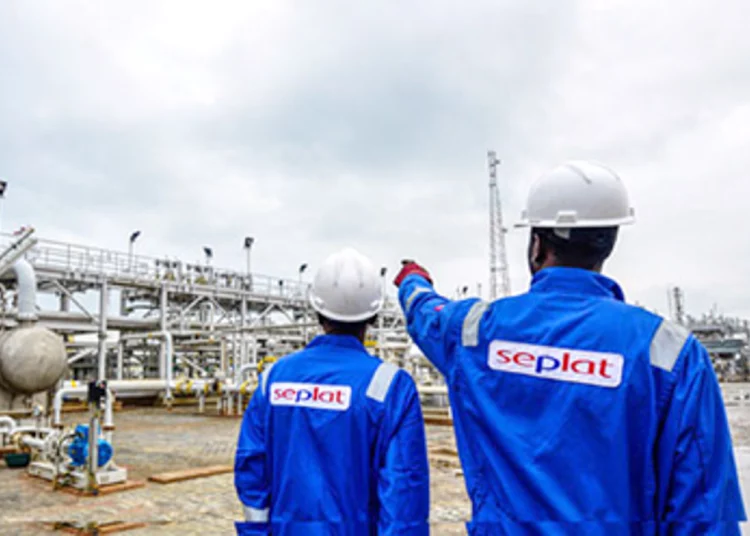
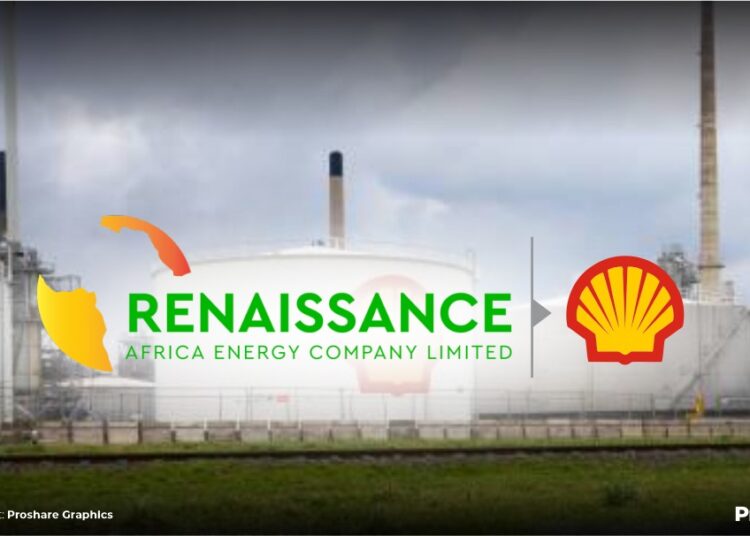
Turning to the foundation of Renaissance Africa Energy Co, which will celebrate its first anniversary this March, he explained that IOC divestment had enabled its shareholders to acquire Shell Nigeria’s onshore shallow water assets, marking a transition from international to African operatorship. These assets have now been successfully operated for over 11 months.
He acknowledged the Nigerian government’s swift approval of the divestments, the major reforms that have energised the industry, and NNPC’s support.
“As our name connotes, it’s a new beginning and perhaps the greatest opportunity for Nigeria and indeed Africa that this energy renaissance is African-owned and Africa led,” he noted, adding that the company has a bold vision to be Africa’s leading energy company, enabling energy security and industrialisation in a sustainable manner. “This mission will be underpinned by our core values of collaboration, respect, integrity, safety and performance.”
The company has increased oil production by 100,000 in 100 days and contributes 2 billion scf of gas to the global gas market, and is working to set the company on a growth path aligned with Nigeria’s ambition to produce 2mn BOPD by 2027 and 3million bopd by 2030.
“African companies are not just replacing international companies. We are redefining the objectives of the assets linking production to power, to industry, to jobs, domestic value and by implication, economic and social political stability of Africa.”
Attah underlined the need for global support to enable Africa’s energy transition, including finance, technology and reliable infrastructure, to enable Africa to convert potential into progress, highlighting that Africa is rich in resources, talent and ambition and noting its young population.
“Africa should be enabled to lead its energy future on its own terms,” he stressed. “If the world wants Africa to replace diesel and biomass as the main energy source, then gas to power, grids and domestic systems must be financed and supported to power industries with lower emissions. Africa needs proven technologies deployed at scale, designed for reliability and real operating conditions. Gas, renewables, storage, grids must work together as systems. Africa’s transition will endure only if we invest in people, governance and operating discipline so Africa-led companies deliver competitively and responsibly for decades to come,” he said. “This is why the current shift in ownership matters.”
Attah highlighted the need for African governments to create certainty, stability, and an enabling environment for investors to thrive, and urged global businesses to partner with Africa for mutual benefit, to integrate global energy systems and global financial institutions, and to release funds to unleash growth.
“If we get this right, we will build globally, more robust energy systems that will power industries, strengthen societies, deliver dignity and reduce emissions in a manner that will enable climate change goals to be achieved sustainably, at least looking through the African lens,” he concluded.
“Africa’s energy transition will not slow the global transition; it will strengthen it, because when Africa powers its people, builds its industries and grows responsibly, the world does not lose; if anything, it wins, and the vagaries associated with Africa’s underdevelopment will be a thing of the past.
He ended with the rallying cry, “Let the African energy renaissance begin!”
SOURCE: LEADERSHIP NEWS PAPER
About The Author