

…As IOC divestments boost indigenous production to 50%
President Bola Tinubu has said reforms of the oil sector have ended an era of underinvestment in Nigeria’s oil and gas sector, driving over $8 billion in direct investments and up to $10 billion in capital inflows.
According to him, the divestments of international oil companies (IOCs) have propelled indigenous production beyond 50 per cent in the last year.
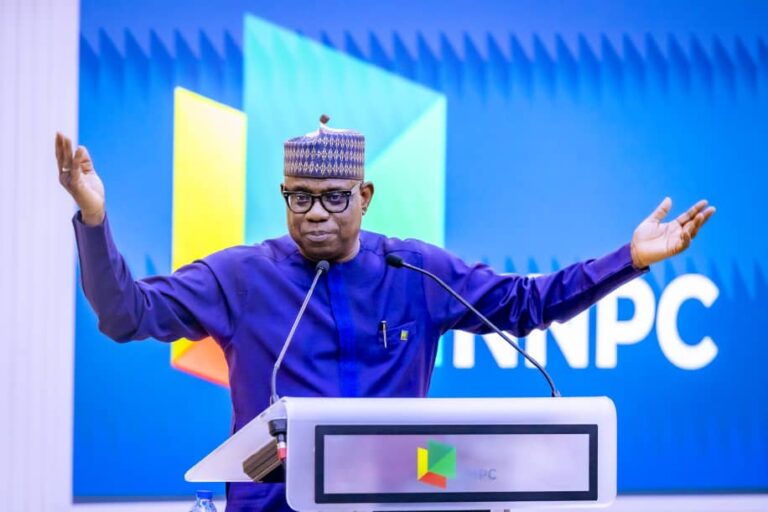
Speaking at the opening session of the 9th Nigeria International Energy Summit (NIES 2026), in Abuja on Tuesday, President Tinubu said the administration inherited in May 2023 a sector “rich in potential, yet constrained by inefficiencies, uncertainty, and prolonged underinvestment.”
The President, who was represented by Vice President Kashim Shettima, added: “We set to work without panicking, guided by the clear understanding that energy cannot be treated simply as an economic commodity if stability is our goal. Energy is a catalyst for national security, industrial growth, social inclusion, and regional cooperation.”
Tinubu stated that the government was “committed to building an energy system that delivers reliability, transparency, sustainability, and shared prosperity,” outlining key reforms including full implementation of the Petroleum Industry Act (PIA) as a “live wire of sector reform.” He continued: “We consolidated its role and strengthened regulatory institutions to ensure clarity of goals, transparency, and investor competitiveness. Nigeria introduced fully digital, transparent, and competitive licensing rounds to the
We approved the commencement of the 2025 licensing round, creating new investment windows.”
President Tinubu disclosed that “Nigeria’s upstream activity recorded a historic rebound, with rig count growth from eight in 2021 to 69 by late 2025, reflecting renewed exploration.
Also, final investment decisions (FIDs) exceeded US$8 billion, including major offshore gas developments, he noted
Tinubu said the government also introduced a broad executive order on oil and gas investment, enabling the unlocking of up to US$10 billion in capital inflows, streamlining project approvals, reducing bureaucratic delays, and positioning Nigeria as a prepared investment destination.”
“In 2025, we introduced the Upstream Petroleum Operations Cost Efficiency Incentives Order, providing tax credits of up to 20 per cent to promote cost efficiency,” resulting in average crude production improving to approximately 1.6 million barrels per day.”
He affirmed: “Through targeted initiatives such as Project 1 Million Barrels Per Day, we are working systematically towards 2.5 million barrels per day by 2027. Our long-term national ambition remains clear: 3 million barrels per day of liquid hydrocarbons and 12 million cubic feet per day of gas by 2030,” the president stated.
Tinubu said crude oil theft, which had been a major constraint on production and revenue, declined significantly due to enhanced security coordination, surveillance, and regulatory enforcement.
He added that the efforts paid off, restoring operational stability and improving Nigeria’s production reliability in international markets.
“Early reforms, most notably fuel subsidy removal and foreign exchange liberalisation, repositioned the sector’s economics, improved market efficiency, and enhanced long-term investment attractiveness.
“While these measures required national sacrifice, they laid the foundation for sustainability, fiscal resilience, and investor confidence.
“Industry stakeholders and independent experts have described these reforms as transformational, aligning Nigeria’s energy sector with global best practices,” he added.
The Nigerian leader implored the participants “to engage constructively, invest confidently, and partner purposefully with Nigeria.”
Earlier, Gambian President Adama Barrow observed that Nigeria’s policies had implications far beyond its borders.
He said that working together through strategic partnerships was key to regional solutions and energy security.
Also, the President of the Republic of Equatorial Guinea, Teodoro Mbasogo, maintained that Africa must cease to be merely an exporter of raw materials and focus on processing them for the betterment of future generations.
Minister of State for Petroleum Resources (Oil) Heineken Lokpobiri said Nigeria is now “investment-ready,” explaining: “What makes Nigeria now different is the legal, regulatory, financial, and structural transformation we are delivering.
We implemented the Petroleum Industry Act (PIA), which gives investors a stable fiscal framework.”
He noted production rose “to between 1.7-1.83 million barrels per day, up by roughly 300,000 barrels in July 2025 alone,” with rigs jumping “from a paltry 14 in 2023 to over 60.”Lokpobiri announced major FIDs, stating: “Shell’s $5 billion Bonga North project, and TotalEnergies’ $550 million Ubeta project marks Nigeria’s first major FIDs in over a decade.
This was followed by Shell’s $ 2 billion HI project and Chevron’s $1.8m cumulative spend on its Panther project.
Only recently, the global CEO of Shell announced their commitment to taking a $20 billion FID.”
He added: “In 2025 alone, 28 new field development plans worth $18.2 billion were signed, with potentials of 1.4 billion barrels of oil daily. “On divestments, the Minister declared:
“We recently enabled International Oil Companies (IOCs) to transfer onshore and shallow water assets to capable Nigerian companies. From Shell to Renaissance, ExxonMobil to Seplat, Eni to Oando.
These are not just transfers of assets, they are transfers of confidence, capability, and ownership which has resulted in additional 200,000 barrels per day.”
On his part, the chairman of IPPG , Adegbite Falade, confirmed: “For the first time, indigenous producers and independents now account for more than 50 percent of national production,” attributing this to “necessary approvals… to major upstream M&A activities, and this further increased local ownership.”
He urged: “We must continue to create an industry that allows the driving and the envelope of private capital… reduce bureaucracy… ensure policy stability and adopt competitive fiscal frameworks.”
The group chief executive officer NNPCL, Bayo Ojulari, said Nigeria’s reserves – “over 37 billion barrels of oil and 2.9 trillion cubic feet of natural gas” – position it as “Africa’s strategic energy reserve holder,” with gas as “the bridge to a cleaner future.”
Also speaking, minister of state for Petroleum Resources (Gas) Ekperikpe Ekpo reported domestic gas supply “exceeded 2 billion standard cubic feet per day for the first time,” with output at “7.5 to 7.6 billion standard cubic feet per day,” he stated.
SOURCE: LEADERSHIP NEWS PAPER
About The Author