
Top market analysts have expressed concern of possible sharp rise in crude oil supplies as American Companies moves to revive Venezuelan production capacity about a potential sharp rise in crude oil supplies as American Companies move
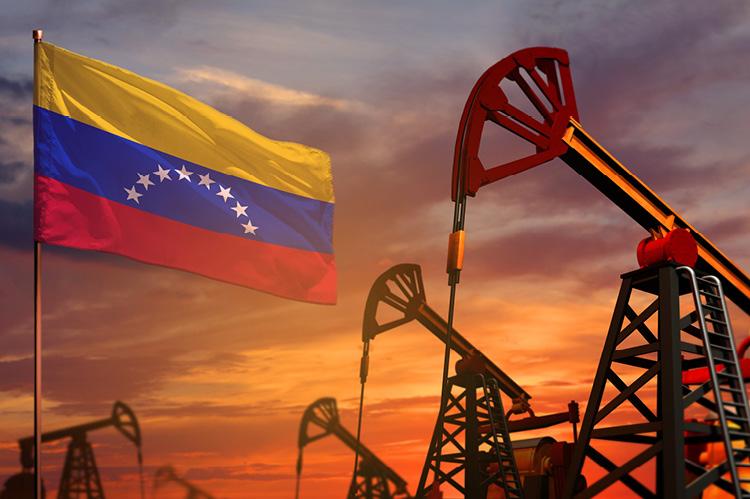
The capture of Nicolás Maduro by U.S. forces and Donald Trump’s announcement of a political takeover of the country mark a turning point for a producer long sidelined by international sanctions and chronic underinvestment. As a founding member of OPEC, Venezuela holds approximately 17 per cent of the world’s proven oil reserves, or nearly 303 billion barrels. However, operators have left this potential largely untapped for more than a decade.
JPMorgan says a regime change could trigger a gradual but meaningful recovery in output. The bank’s analysts estimate Venezuela could raise production to 1.3–1.4 million bpd within two years and reach as much as 2.5 million bpd over the next decade as operators rehabilitate existing capacity and deploy new investments. “These dynamics are not currently priced into the long end of the oil price curve,”the analysts say.
Goldman Sachs adopts a more cautious stance as it converges on the medium- and long-term impact. In a note dated January 4, the bank states that a Venezuelan production recovery would require significant investment and sustained political stability. Under a scenario in which output rises to 2 million barrels per day, Goldman estimates a downside impact of approximately $4 per barrel on oil prices by 2030.
In the near term, the impact would remain “ambiguous, but modest,” and would largely depend on the evolution of U.S. sanctions policy. Goldman keeps its 2026 forecasts unchanged, with Brent averaging $56 a barrel and WTI at $52. The bank also expects Venezuelan production to remain broadly stable at around 900,000 bpd by that time.
The prospect of a recovery largely depends on the role U.S. oil companies could play. Some firms never fully exited Venezuela despite sanctions and past nationalisations.
Chevron stands as the most emblematic case, as the company maintained a presence through joint ventures with state-owned PDVSA even as most international majors left in the 2000s.
This continuity enabled Chevron to retain operational knowledge of its existing assets, although U.S. sanctions severely constrained its activities. In a normalisation scenario, Chevron appears among the best-positioned players to support a gradual rehabilitation of infrastructure.
By contrast, ExxonMobil and ConocoPhillips exited Venezuela after nationalization waves under former president Hugo Chávez.
Both companies launched international arbitration proceedings to seek compensation. ConocoPhillips has pursued claims of about $12 billion linked to asset expropriations, while ExxonMobil has sought roughly $1.65 billion. These disputes remain central to any assessment of a potential return.
According to sources cited by Reuters, the U.S. administration has recently informed major oil executives that any compensation prospects would require a return to Venezuela and significant upfront investment, funded by the companies themselves. In other words, oil groups would need to commit capital to rebuild a severely degraded sector before recovering any portion of past claims. This condition raises costs and risks, especially as companies must also navigate contractual uncertainty, aging infrastructure, security concerns and the risk of prolonged political instability.
These constraints explain why analysts do not expect a rapid rebound in production. Over the longer term, however, Venezuela could re-emerge as a structural factor in the global oil market.
During the 1970s, Venezuela produced about 3.5 million barrels a day, representing more than 7 per cent of global supply. Production fell below 2 million bpd in the 2010s before settling at around 1.1 million bpd last year, or barely 1 per cent of global output. Some estimates place recent production closer to 800,000 bpd, reflecting deteriorated infrastructure and persistent operational constraints.
SOURCE: LEADERSHIP NEWS PAPER
About The Author