

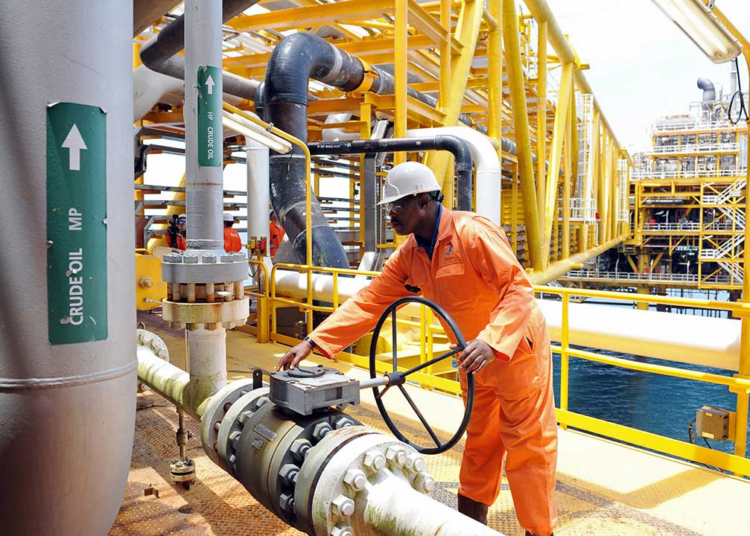
Nigeria’s crude oil production has surged to a peak of 1.84 million barrels per day (bpd) in 2025, up nearly 80 per cent from a low of 960,000 bpd in 2022, the Nigerian National Petroleum Company Limited (NNPCL) confirmed at a high-level Parliamentary Roundtable on the State of Pipelines Security in Abuja on Wednesday.
NNPCL group chief executive officer, Bayo Ojulari, attributed the rebound to a robust “integrated energy security model” that has protected pipelines in the Niger Delta, combating oil theft and sabotage through legislative-executive alignment, intelligence, kinetic operations, regulatory oversight, industry cooperation, and community surveillance. “This success is not accidental,” Ojulari emphasised, noting the 2025 average production hit 1.71 million bpd—the highest sustained level in five years.
The roundtable, convened by the Joint Senate and House of Representatives Committee on Petroleum Resources, also saw the committee dismiss three petitions against pipeline surveillance contracts held by firms such as Tantita Security Services, Maton Engineering Nigeria Limited, and Pipeline Infrastructure Nigeria Limited (PINL). The Coalition of Niger Delta Ethnic Nationalities (CNDEN) had sought decentralisation of surveillance across oil-producing states, but lawmakers found no credible evidence to support the claims.
A vote of confidence was passed for Tantita, security agencies, and NNPCL, following a motion by House Committee on Petroleum Resources (Midstream) Chairman Hon. Henry Okojie. “Tantita and security agencies have recorded significant achievements in securing petroleum assets and boosting oil revenue,” Okojie said, warning that splitting contracts could weaken coordination.
House Speaker Hon. Abbas Tajudeen, represented by Leader Hon. Prof. Julius Ihonvbere, highlighted how theft previously siphoned 10 to 30 per cent of production—billions in losses—prompting the surveillance framework with private firms and communities. This synergy has ramped output to about 1.8 million bpd, created jobs for Niger Delta youths, and restored pipeline availability to nearly 100 per cent. Amid global tensions such as the Middle East conflicts and the Russia-Ukraine war, Tajudeen stressed oil’s enduring role in powering 95% of transport while urging diversification.
Senate President Sen. Godswill Akpabio, represented by Sen. Jimoh Ibrahim, called for deeper collaboration to address infrastructure decay and regulatory gaps. House Committee on Petroleum Resources (Downstream) Chairman Ikenga Imo Ugochinyere confirmed all allegations against Tantita were unsubstantiated and dismissed.
Presentations from the Chief of Defence Staff (represented by Maj. Gen. Jamal Abdulsalam), the Inspector General of Police, the Director General of State Services, the National Security Adviser, the Minister of Defence, and others underscored multi-agency efforts. The reinvigorated Joint Task Force Operation Delta Safe has boosted production from 900,000 bpd to nearly 1.9 million bpd via kinetic and non-kinetic measures, patrols, and partnerships with Tantita through joint operations, achieving over 95% uptime on key pipelines.
Sen. Jarigbe Agom Jarigbe (Senate Gas Resources) and Okojie stressed the need for continuity for stability, while Ojulari urged institutionalising the framework. The National Assembly has bolstered this through laws like the Petroleum Production and Distribution (Anti-Sabotage) Act and oversight of the Petroleum Industry Act (PIA).
NNPCL’s disclosure signals optimism for Nigeria’s oil-reliant economy, which draws over 90% of its forex from crude. Restored output could shore up reserves, fund infrastructure, and draw investment, though experts caution on gas and renewables amid energy transitions. The model’s success offers a blueprint for sector stability.
SOURCE: LEADERSHIP NEWS PAPER
About The Author